
CRA vulnerability management: from component inventories to traceable remediation evidence
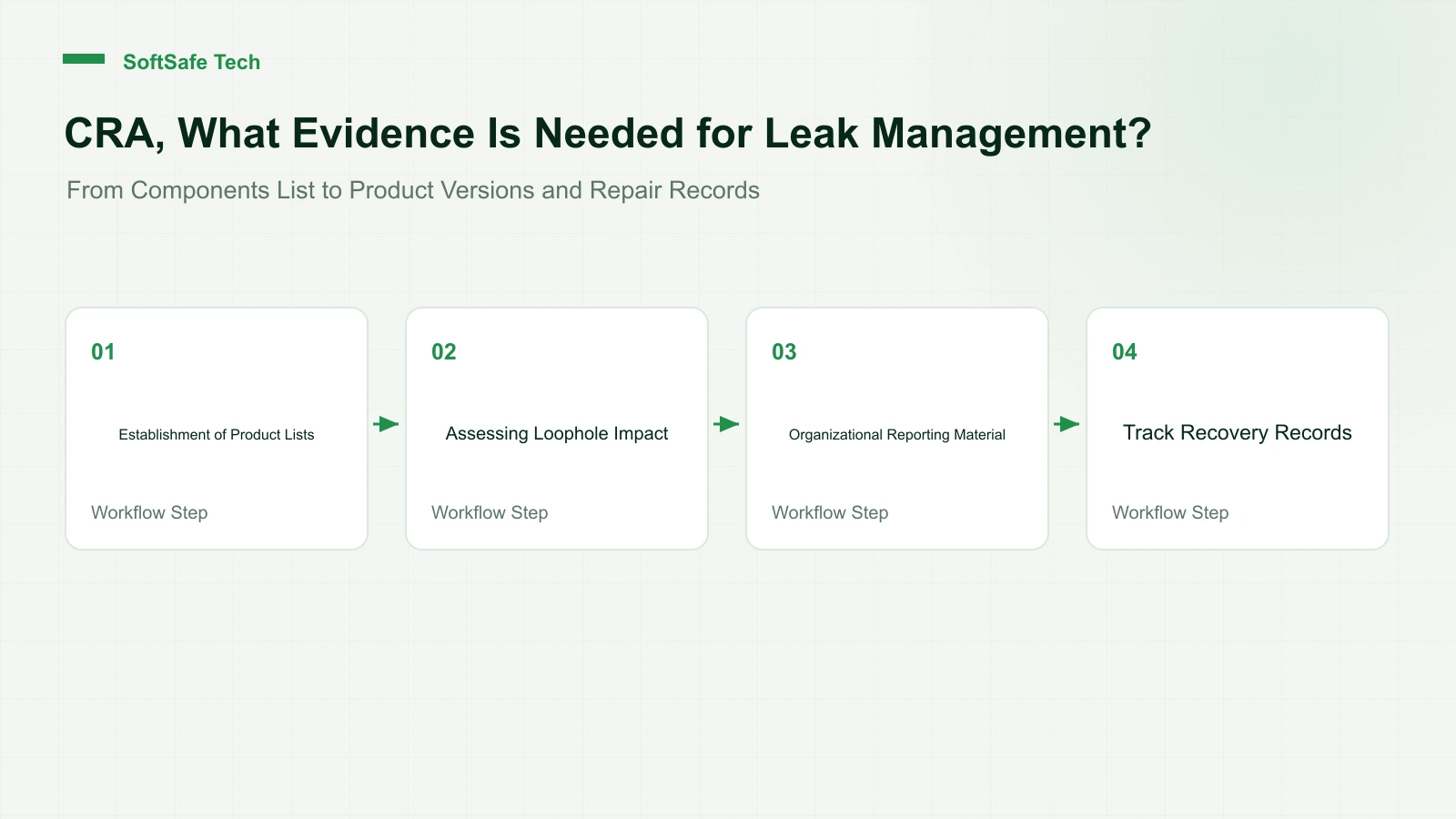
When preparing CRA-related work, R&D teams should first establish an evidence chain that can be updated with each product version: what was used, what was discovered, who made the judgment, how it was fixed, and whether the fix was effective. Whether CRA applies to a specific product and which compliance assessment path is chosen must be determined before proceeding. This article discusses methods for organizing engineering materials, reporting dates, and trigger conditions can be found in CRA Vulnerability Reporting Readiness.
Step one: link the inventory to the release
CRA Annex I, Part II requires identifying and documenting vulnerabilities and components within a product, including using a generic, machine-readable format to create an SBOM. The project should retain corresponding lists for each release rather than keeping only one that continuously updates.

Engineering can record product versions, source code commits, build configurations, artifact hashes, component identifiers, and dependency relationships. When the supplier's list differs from the detection results, discrepancies should be reviewed for confirmation; unidentifiable parts should retain explanations and cannot automatically be attributed to self-developed or risk-free components.
Step two: bring findings into human review
Software Composition Analysis (SCA) helps identify component and known risks, while static application security testing (SAST) checks for code defects. Binary analysis and fuzz testing can be applied to corresponding deliverables and test scenarios. Different methods provide different evidence. Alerts should be linked to affected conditions, review opinions, and responsible parties; alerts cannot be directly equated with vulnerabilities that are exploitable.
For unresolved issues, record the reason for non-fix, mitigation measures, approver, and review date. Records should also be updated when assessment conclusions change due to configuration, dependency, or usage environment variations.

Step three: make remediation verifiable
A reproducible issue record should have the affected version, fix submission, test cases, regression results, and published versions. A patch being available does not mean users have installed it; for products already delivered, tracking update methods and necessary user instructions is also required. Both development and security activities should be integrated into existing lifecycle processes to minimize post-facto materials.
Step four: organise evidence by purpose
Product documentation, risk assessments, test results, vulnerability management and change records should be interlinked. Tool outputs are part of this but cannot replace product scope judgments, organizational responsibilities, or comprehensive technical documents. Existing automotive safety systems or other management frameworks can be reused selectively; however, gaps in these processes must still be verified.
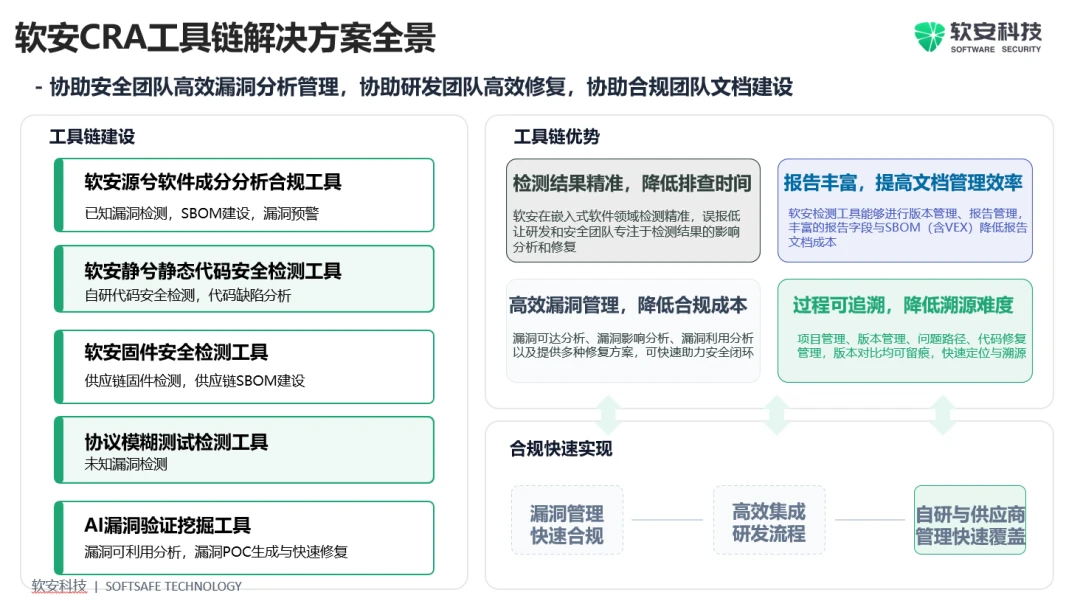
SoftSafe Tech’s open SCA and SAST capabilities support component analysis and code review. Implementation should be carried out with representative projects to validate the scope of support, the integration approach and the quality of materials, before decisions are made on deployment and process arrangements, without commitments being made on the basis of an unspecified misreporting rate or reduction rate.