
Why AI code review needs the real build configuration
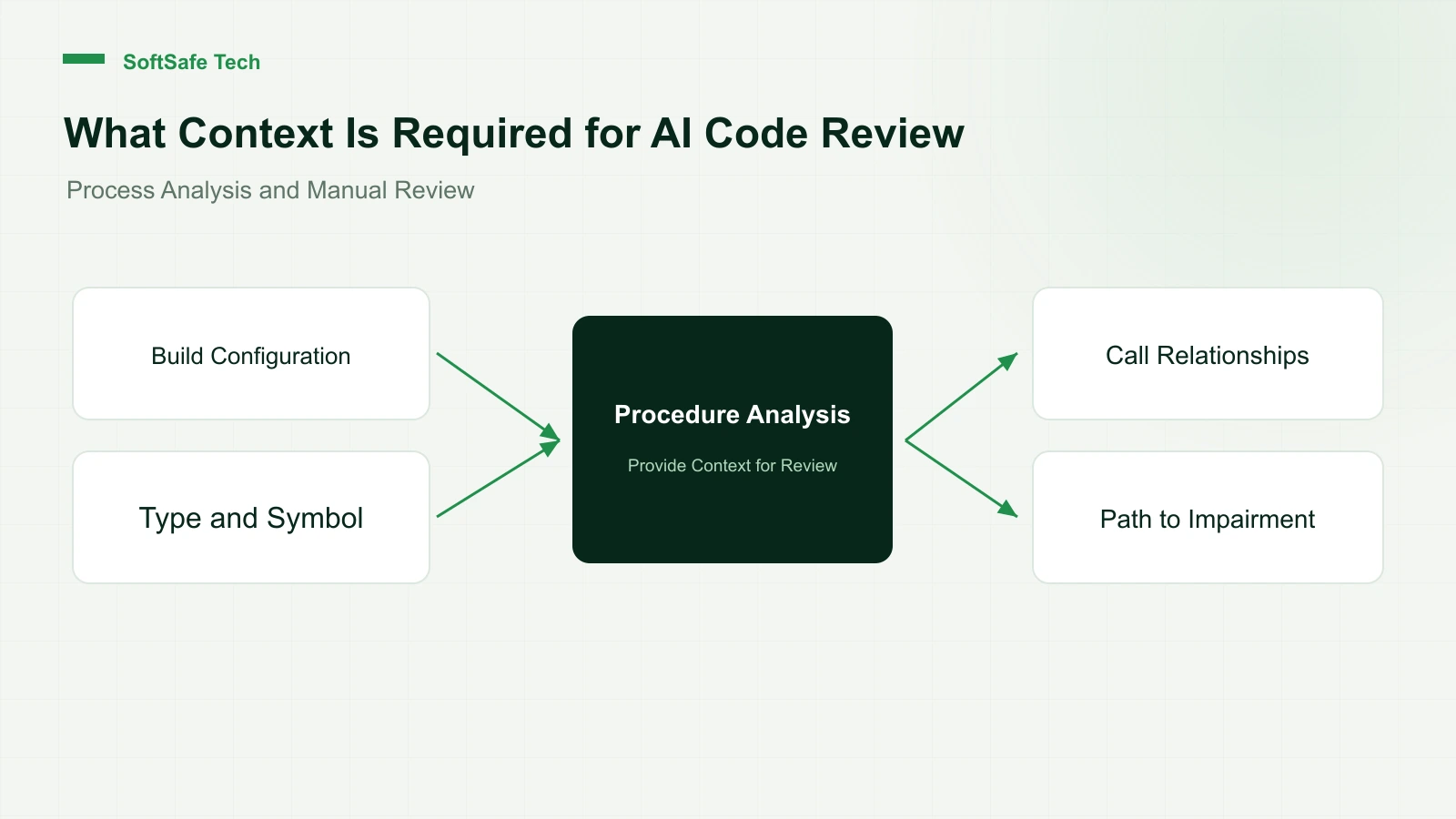
Real compilation configurations help AI Code Review determine what actual code is included in this build, providing context on types, call relationships, and data flow. For projects heavily using macros, cross-compilation, and vendor extensions, these details are crucial for determining whether alerts are valid.
The same source code can produce different programs
Conditional compilation enables different implementations of a file based on product configurations. Changes in header search paths, target platforms, and compiler options also affect type interpretation. Without seeing full context, reviewers might treat mutually exclusive branches as valid logic or miss the actual implementation used during build.
Clang's compilation database uses a working directory, source files, and real compile commands to describe translation units, allowing one file to correspond to multiple configurations. Therefore, analysis should confirm that the database comes from the target delivery build and that generated files, headers, and toolchain information are available. Compilation Database Specification for Clang
How build information supports defect evidence
Consider a teaching scenario: A caller allocates a 32-byte buffer, but the capacity parameter is set to 256. This parameter is passed through multiple functions before reaching the write function. To form an out-of-bounds judgment, it's only necessary to confirm that downstream writes could exceed the 32 bytes and that this path is reachable. The erroneous capacity serves as a clue, but does not necessarily indicate an actual overflow has occurred.
Effective macro configurations, parameter propagation, actual boundaries, trigger conditions, and related code should be displayed in better review results. Static analysis can provide these structured clues for large models, which then assist in explaining impacts, verifying requirements, and proposing remediation suggestions.
What to check when evaluating a tool
![[AI Code Review Why Needs Real Compilation Configuration? Related Image 2]](/content-assets/articles/11288091/original-02.webp)
Choose a representative project and first assess the coverage of parsing: Which files successfully entered the model, which functions are missing implementations, and which extended syntaxes were converted or skipped. Then, randomly check alerts: Can each step return to source code? Are conditions supported by configuration and data? Is it possible to validate fixes with tests?
For proprietary syntax, simply stating that 'the scan can continue' is not enough to confirm compatibility. If the normalization process loses type, boundary, or side-effect information, subsequent reasoning may still deviate from the actual program.
Capability boundaries and product practice
![[AI Code Review Why Needs Real Compilation Configuration? Related Image 3]](/content-assets/articles/11288091/original-03.webp)
Improving build information enhances contextual reliability, but cannot prove the absence of defects. External library models, concurrent behaviors, runtime inputs, and business constraints may still be incomplete; unreported issues could also stem from insufficient analysis scope.
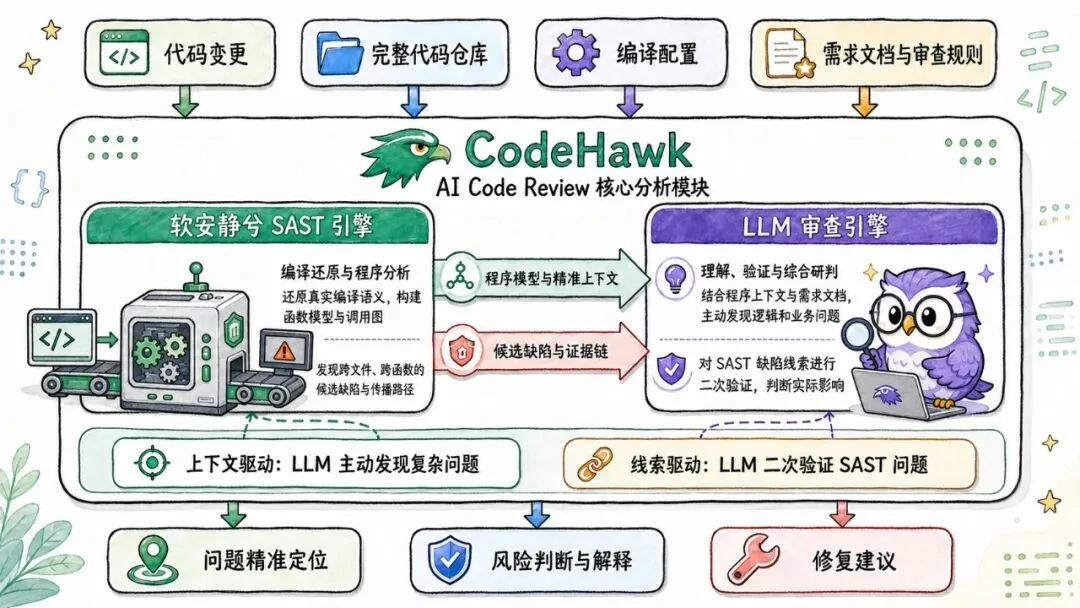
CodeHawk employs a 'LLM + SAST' collaborative architecture, with StatiCode providing the program models and potential defect clues. The actual compiler support, analysis scope, and version capabilities should be confirmed through real-world engineering validation.
Do we no longer need manual reviews with a compiled database? We still do. It addresses build context issues and cannot replace requirement judgments and risk decisions.
How should we handle the AI-provided fix code? Treat it as a candidate modification, verify ownership, boundaries, and compatibility, then run regression tests that cover the defect-triggering paths.