
Validating automotive software security: from memory safety to supply chain evidence
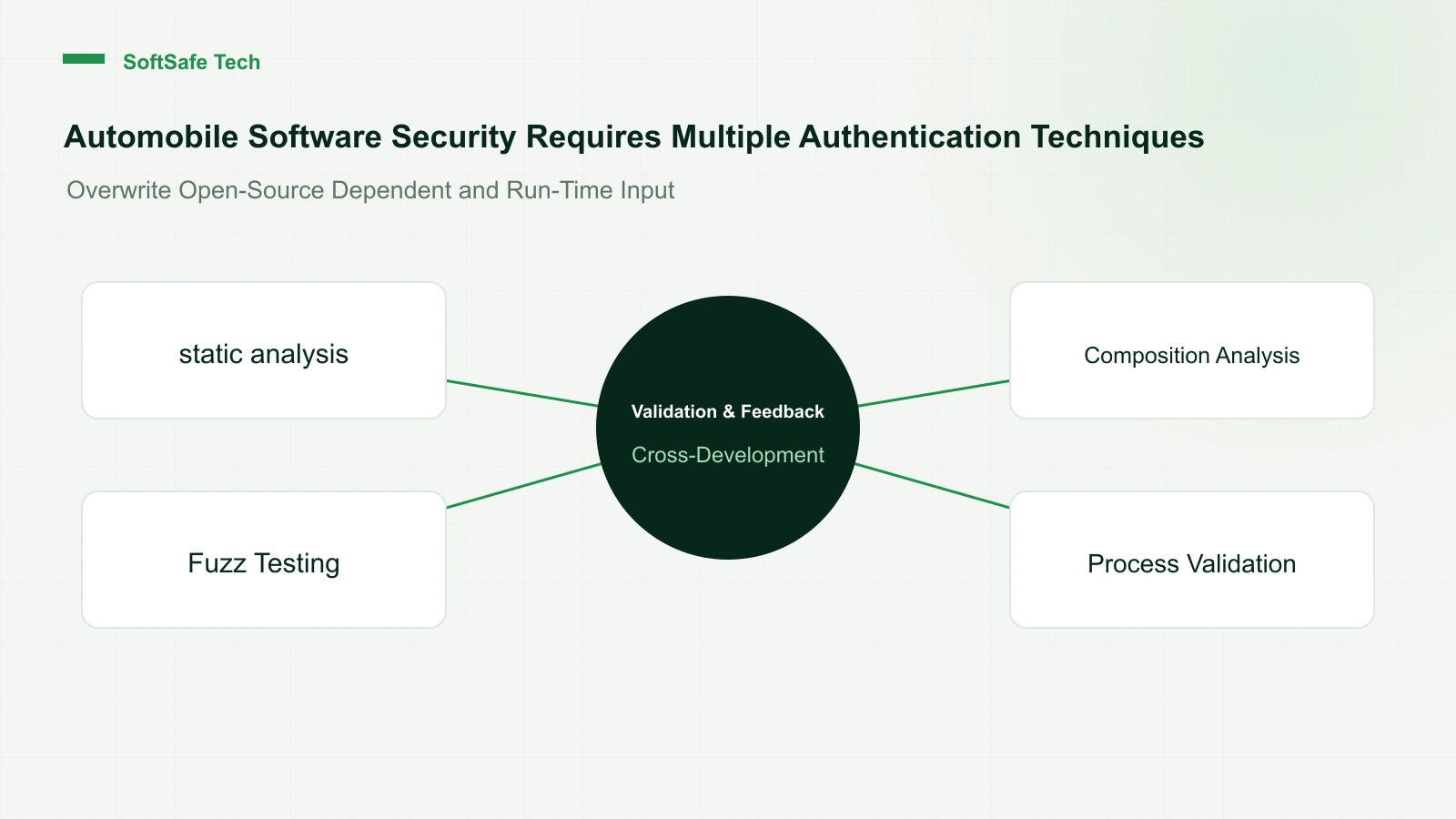
Automotive software security requires validating both code behavior, component origins, and system failure mitigation strategies. Detecting memory leaks can indicate resource management issues; however, whether this impacts vehicle functionality depends on further analysis of deployment location, isolation mechanisms, resource limits, and degradation design.
Risk in a common image-processing scenario
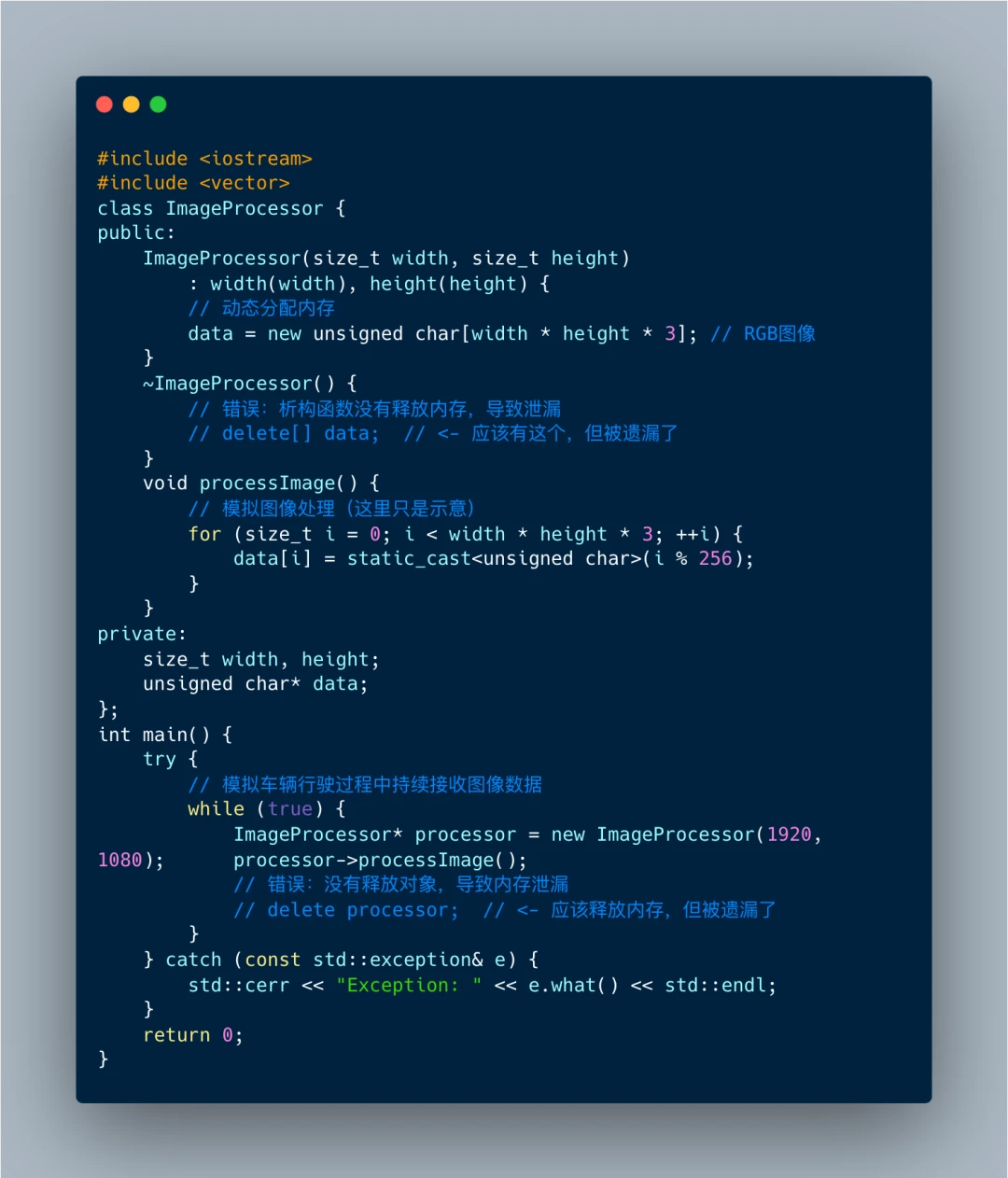
Assume a module continuously receives images, allocating buffers for each frame but failing to release them in some error paths. Over time, this could lead to persistent resource consumption, resulting in allocation failures, increased delays, or process anomalies.
This scenario illustrates the lifecycle of resources without corresponding to a specific vehicle model or real-world test case. Exhausted memory does not equate to buffer overflows; both mechanisms trigger differently, and one warning cannot conclusively determine system failure.
C++ projects can prioritize the use of containers and resource handles with clear ownership by employing RAII (Resource Acquisition Is Initialization) to bind resource release to object lifecycles. However, checking exception paths, cross-thread sharing, and long-term references is still necessary; relying solely on smart pointers does not solve all issues C++ Core Guidelines.
Four complementary forms of validation
Static Analysis focuses on issues such as memory, bounds, null pointers, and concurrency in the code. It requires verifying paths based on actual compilation configurations to confirm which version of delivered software is affected by alerts.
Component Analysis identifies open-source and third-party dependencies, combining versions, licenses, and vulnerability notifications to establish a supply chain record. After a component hits a vulnerability, it's necessary to check the usage conditions and patch status.
Runtime Testing focuses on real resource consumption, abnormal inputs, long-running processes, and fault recovery. For image modules, in addition to normal frames, tests can be conducted under conditions such as size anomalies, data interruptions, and consecutive allocation failures, observing whether resources return to a controllable level.
System Validation confirms how local failures are detected, isolated, and downgraded. Key conclusions need to be revisited in the context of system architecture and security goals; single-code tool results cannot replace comprehensive arguments at the vehicle or system level.
What suppliers should retain at delivery
It is recommended to deliver software versions along with build identifiers, component lists, defect resolution records, test environments, and regression results. When there are temporary exemptions, explain the triggering conditions, mitigation measures, responsible parties, and review times to avoid leaving 'ignored' as the only conclusion.
The automotive industry also involves cybersecurity management and software update control. UNECE's R155 and R156 focus on related management and requirements, with specific applicability depending on vehicle models, markets, and relevant regulations. Tools cannot replace these once-and-for-all scans. UNECE Official Explanation
Do fixing memory leaks prove vehicle safety? No, they don't. Fixing specific defects alone doesn’t ensure system security; it also depends on comprehensive requirements, architecture, and validation evidence.
Should third-party components be tracked for defects as well? Yes, if they enter the delivery product and could impact the system. It's necessary to clearly assess and handle responsibilities before collaborating with suppliers on repairs.