
Is local deployment of a large model secure? Four boundaries to check before launch
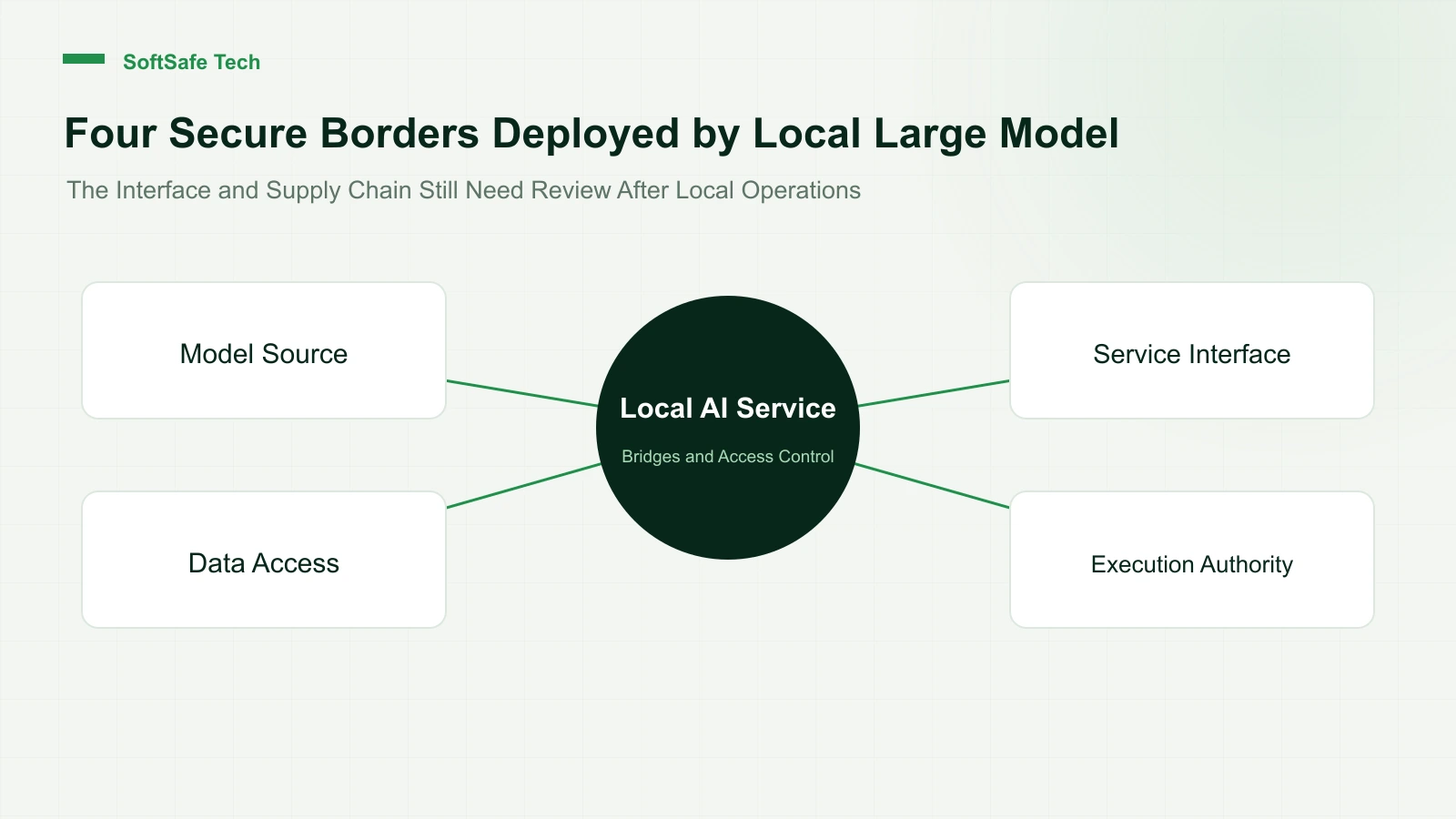
Local deployment controls the flow of data and infrastructure but still requires scrutiny of model sources, service interfaces, data permissions, and output behaviors. Security comes from the actual effectiveness of these controls, not solely by deploying within an internal network.
Boundary one: where do the model and code come from?
Obtain artifacts from a publisher-managed repository, ensuring fixed model versions or commit numbers are used. Save the checksums and licenses. The model directory may contain additional code that is loaded during the process. Hugging Face's security guidelines recommend using safetensors; when `trust_remote_code` is enabled, review related code and fix the revision. Hugging Face Security Guidelines
Mainly reducing specific loading risks, secure serialization formats do not prove that a model does not have backdoors, biases, or inappropriate outputs. Source reviews of the download origin and behavioral tests on the model should be conducted separately.
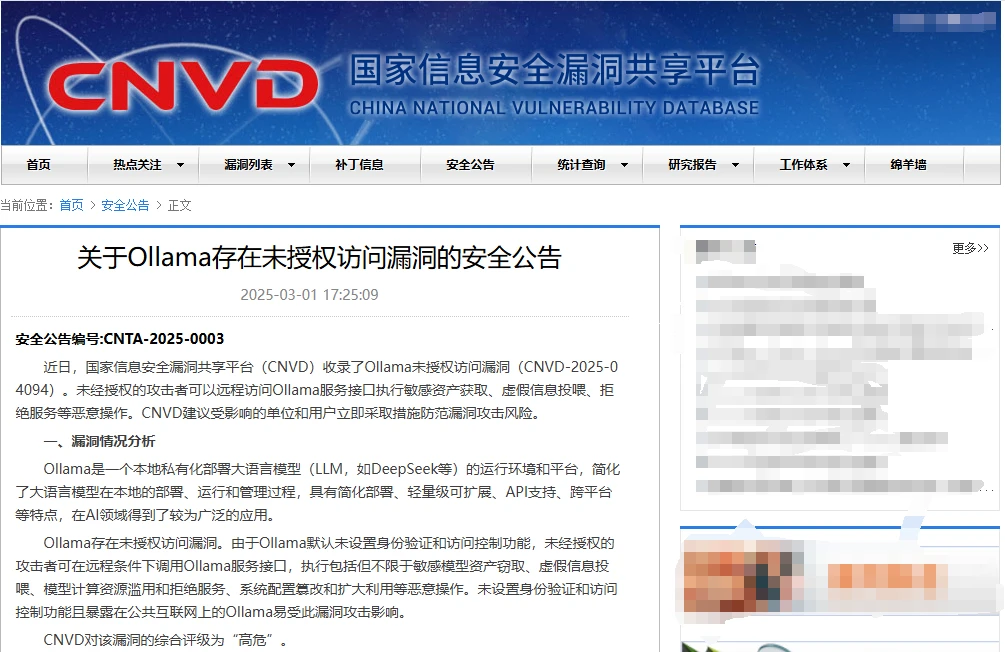
Boundary two: who can access the inference service?
For example, Ollama’s official documentation indicates that it listens on `127.0.0.1:11434`. This can be changed via the `OLLAMA_HOST` environment variable. After changing the address to one accessible over the network, ensure you recheck authentication for gateways, access controls, data protection measures, and rate limiting. Do not assume that default behavior on your local machine is suitable for enterprise multi-user configurations.
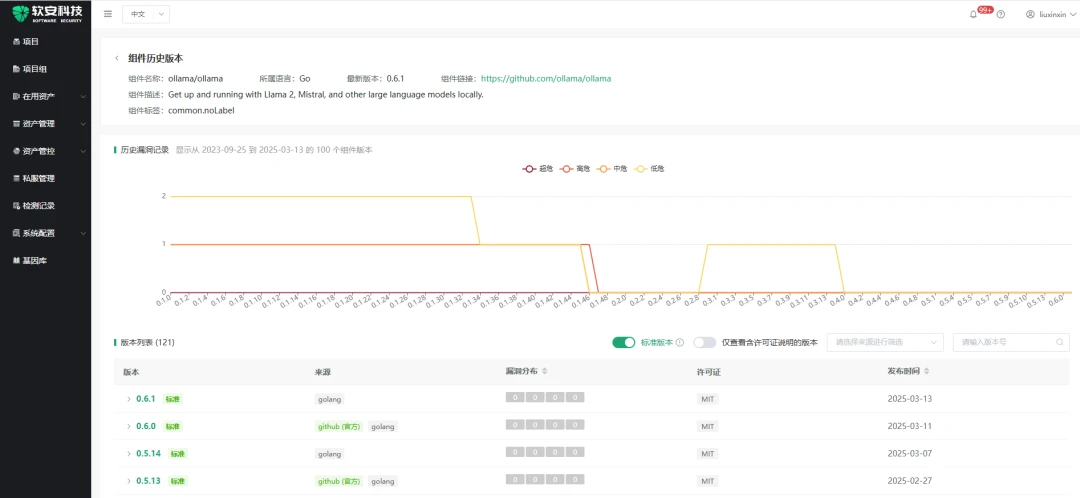
Establish a reasoning framework, runtime environment, and base image list to track security advisories for the corresponding versions. Both interface exposure issues and software vulnerabilities within the framework may exist simultaneously; however, verification and remediation methods differ.
Boundary three: what can the model access and change?
When connecting to a knowledge base, ensure that access permissions are tied to user identities. Do not allow all users to read all documents simply because a high-privilege account is used for the model service. Sensitive data such as logs, caches, and vector libraries should also be managed accordingly.
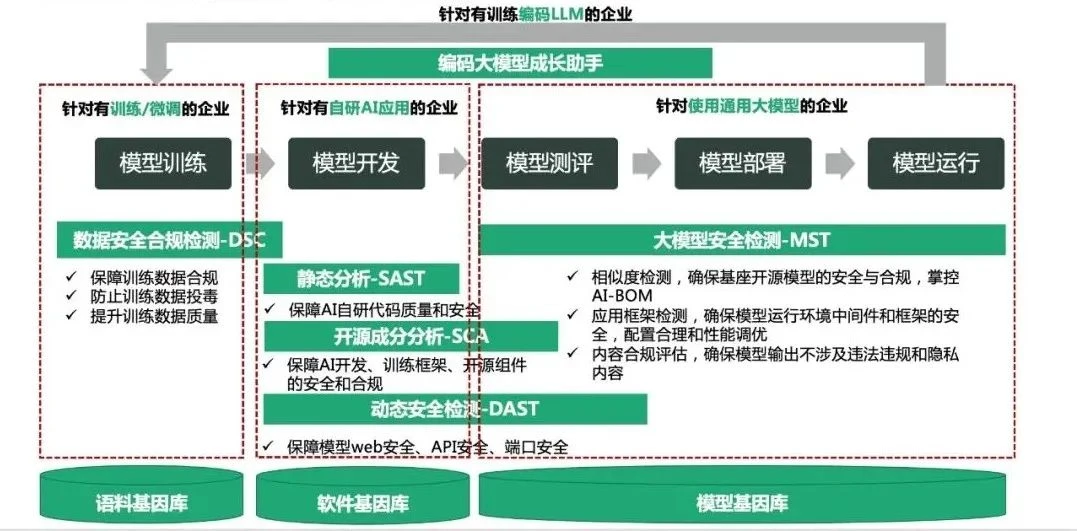
When connecting tools, separate read and write permissions. Simply recommending a model to perform an action does not imply it has the necessary authorization; specific objects, parameters, and permissions should be verified by the program. High-impact actions should also retain audit trails.
Boundary four: when is an answer safe to use?
The model may generate content that contradicts facts but appears coherent. This should not be simply attributed to “neurons making mistakes”; instead, it represents a reliability risk for generative systems, which can be managed through scenario assessments. NIST AI Risk Management Framework
Prepare normal issues, unanswered questions, permission boundaries, and external content inducement scenarios for the actual business. Record model versions, prompt templates, search data versions, and expected answers; then evaluate answer correctness, reference verifiability, and rejection behaviors. Re-run affected tests if the model or knowledge base changes.
Is complete offline deployment secure? Offline can reduce some external connection risks but importing artifacts, internal privilege escalation, and erroneous outputs may still have an impact.
Can a single content safety score cover all uses? No, it cannot. The conclusion depends on the test set, scenario, scoring rules, and system version. It is important to clearly report the scope of applicability.