
Securing ROS 2: from node identity to communication permissions
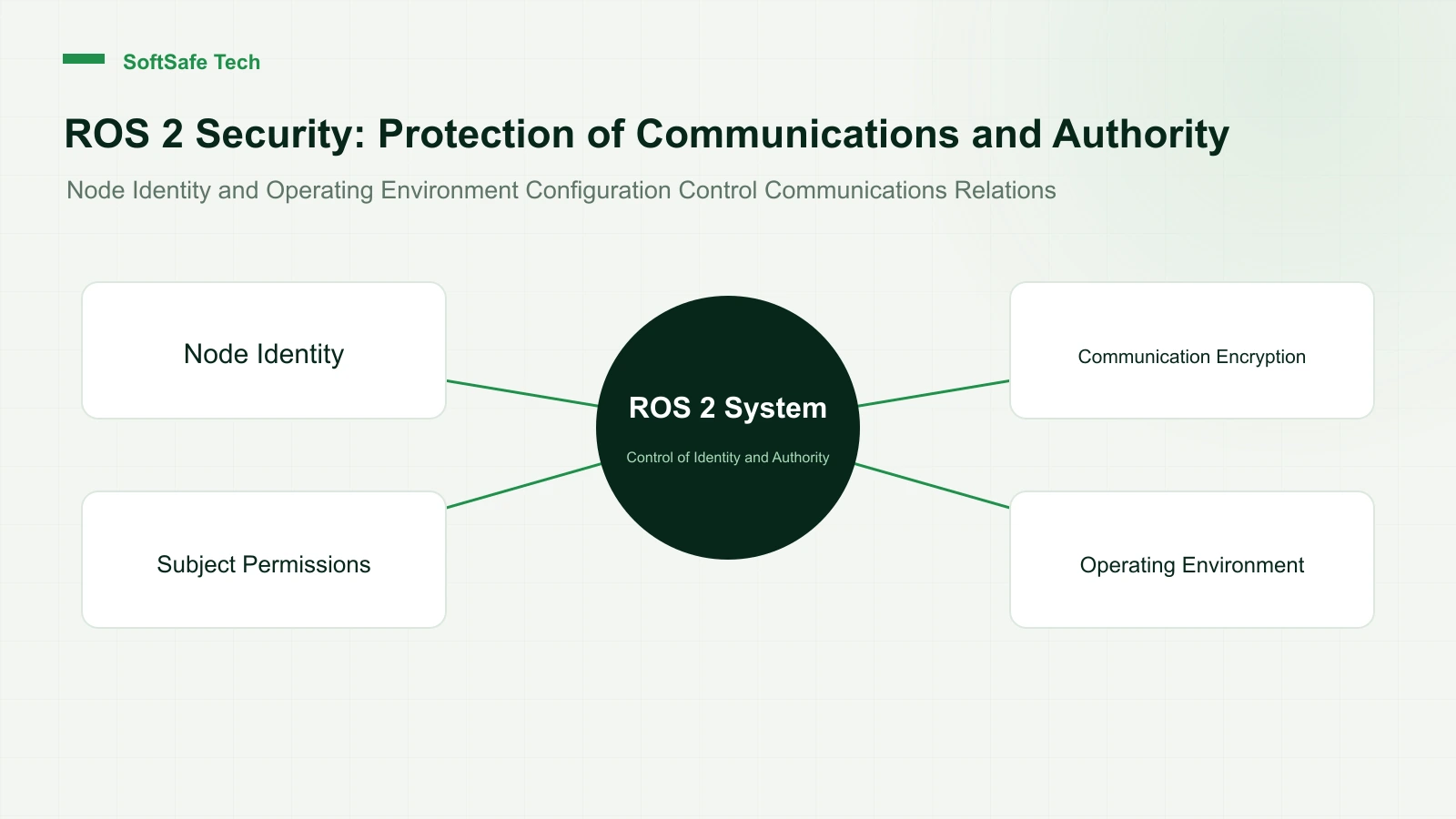
ROS 2's communication security needs to be actively configured and validated. When using middleware that supports DDS Security, SROS2 can manage identity and permission materials for deployment and enable corresponding security policies. Installing ROS 2 itself does not mean the robot nodes have already been authenticated, authorized, or encrypted with each other.
First define the scope
ROS 2 is a robotics software development framework and tool ecosystem, not to be equated with a complete operating system running only on Linux. This article discusses ROS 2 communication deployment using DDS Security; specific operations should confirm the selected release version, middleware implementation, and support.
What data is exchanged between nodes, who is allowed to publish control commands, which diagnostic interfaces can be accessed—these all affect the security boundary. Communication mechanisms protect these boundaries but do not automatically determine if an authorized control command complies with a real-world environment.
Document identity and permission configuration
List the relationships between nodes, topics, services, and actions first. Then configure identities and permissions for corresponding security domains or enclaves. Avoid using the example-wide permission policies directly in production, and do not let all devices share a single private key for extended periods.
The official design documentation for ROS 2 lists materials such as certificates, private keys, governance policies, and permission policies. Relevant environment variables include `ROS_SECURITY_KEYSTORE`, `ROS_SECURITY_ENABLE=true`, and `ROS_SECURITY_STRATEGY=Enforce`. In strict mode, security materials must be available for participants to start normally; otherwise, they cannot launch. ROS 2 DDS-Security Design

These variables need to be passed to the process environment of the actual nodes that start, not just set in debug terminals. Key directories should also be protected, and certificate validity periods and rotation methods should be recorded.
Validation should cover failure scenarios
Tests should not only validate successful communication with legitimate nodes. They also need to verify: whether nodes without credentials can join; whether incorrect identities can publish sensitive topics; and whether the expected failures occur when policy files are missing or invalid; and whether diagnostic tools have the same access restrictions.
Observe communication strategy encryption in a controlled environment, check logs, and verify start statuses. Run these examples again after changing DDS implementations, certificates, or deployment methods. Do not assume that results from one implementation directly represent other combinations. SROS2 Official Example
What is needed beyond communication protection?
Robots still need to handle memory, handles, timeouts, and resource exhaustion issues. Static analysis and runtime tests can provide evidence of code quality; however, disconnection-related stop, slow down, or downgrade behaviors require system design validation. Encryption communication does not equal functional safety certification, nor does it replace fault analysis for sensors and actuators.
Can the `Enforce` strategy generate a minimal permission policy automatically? No, it enforces security materials and enabled behaviors. Who can do what still needs to be designed and validated by the team.
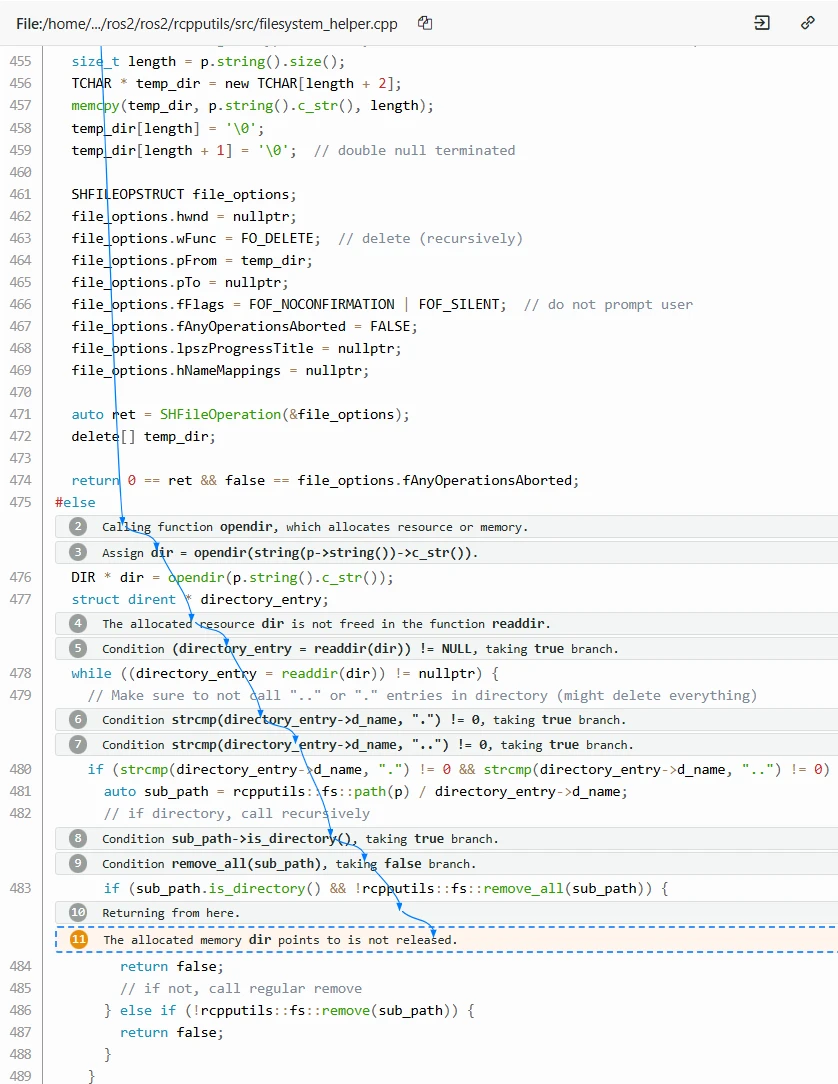
How to Reference Case After Discovering Open-Source Code Defects? Provide the repository, commit number, trigger path, and upstream fix record. Explain the affected scope. If these materials are missing, use examples as a lead for verification.