
CVE-2025-32433: how to determine whether the Erlang/OTP SSH flaw affects your systems
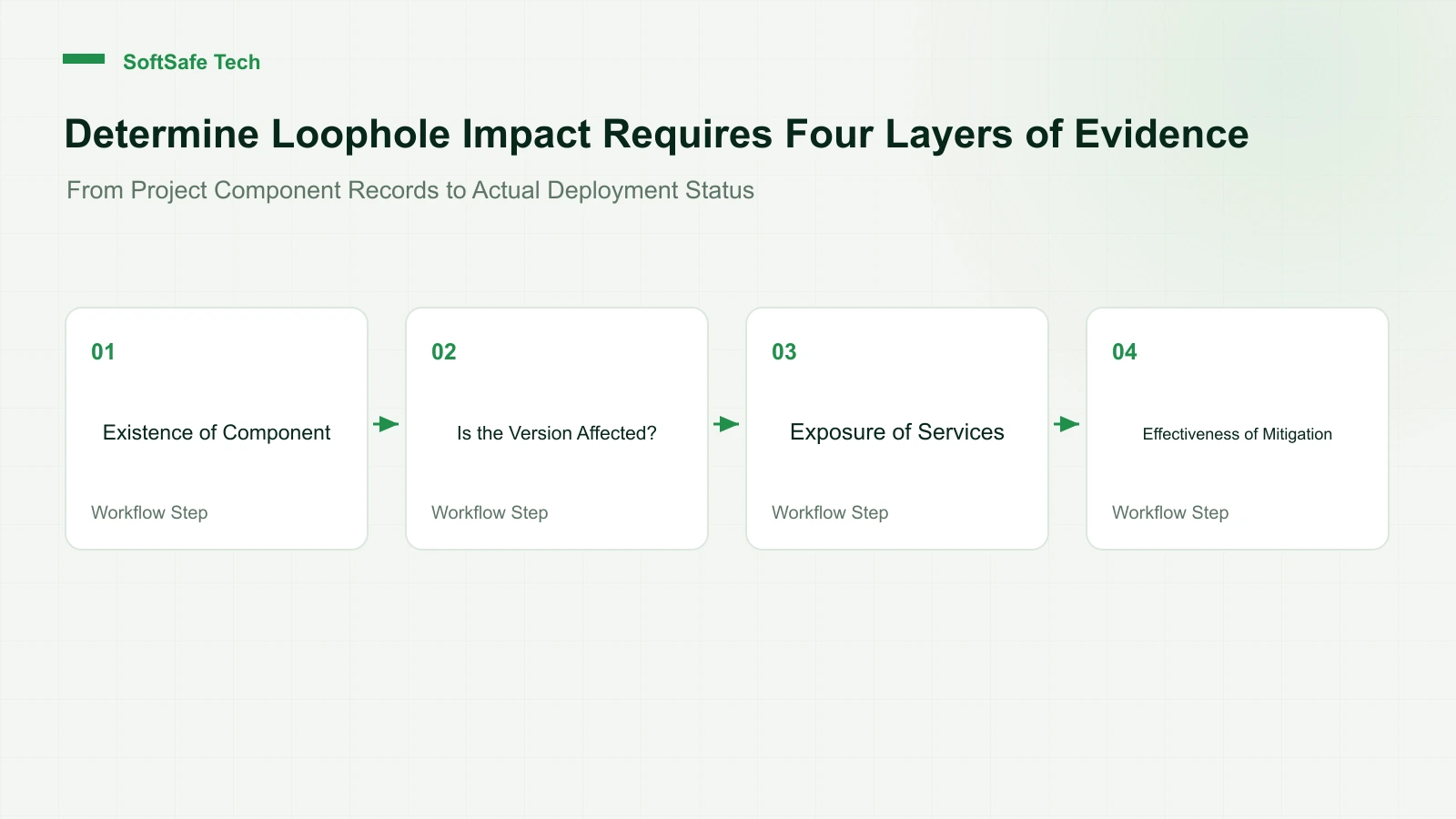
To determine whether CVE-2025-32433 affects your system, you cannot just search for Erlang installation. You need to confirm if the runtime version has been patched, if the Erlang/OTP built-in SSH service is running, and if an attacker can access that service. There are deployment conditions between component presence and actual exploitability.
What boundaries does the official notice define?
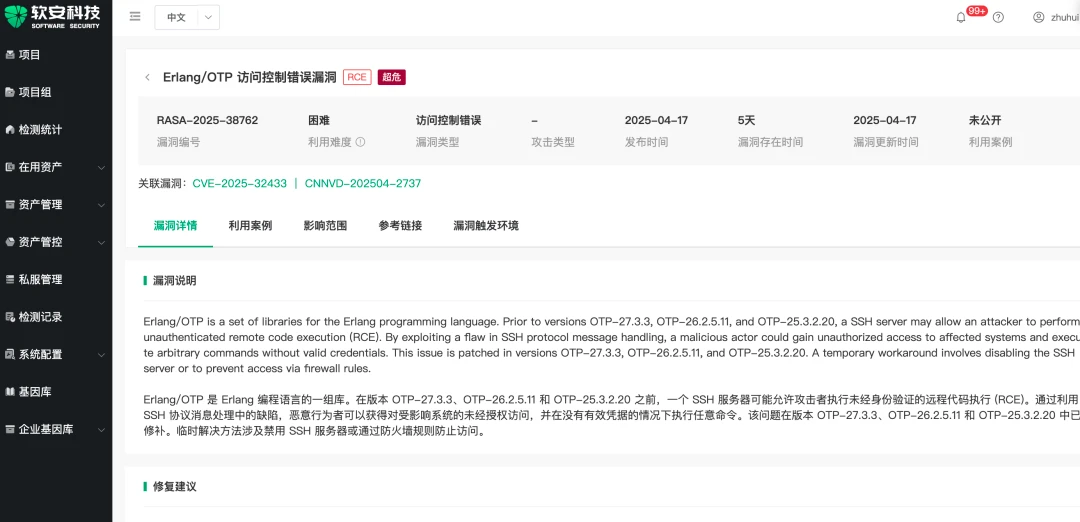
The Erlang/OTP official advisory states that this vulnerability could allow attackers with network access to execute code without authentication in affected SSH services. The advisory lists OTP patched versions as 27.3.3, 26.2.5.11, and 25.3.2.20, corresponding to the relevant maintenance branches; it also notes that earlier versions may be affected. Official Security Advisory
These are the patch points for this advisory, but they are not the complete basis for choosing a target upgrade today. You should also check the support status of your current release, whether the supplier has backported patches, and any subsequent security updates.
](/content-assets/articles/8292856/original-01.webp)
Use four types of evidence to confirm impact
Component Evidence: Locate OTP in server, container images, device firmware, and third-party delivery packages. Record the corresponding product and responsible party. Only check application dependency declarations may miss base image or bundled runtime dependencies.
Version Evidence: Document the actual running version and patch source. A release might roll back patches, not just compare file names; use vendor security advisories and build information to supplement judgment.
Service Evidence: Confirm that OTP-enabled SSH applications are listening on their configured ports. If the system uses OpenSSH or a product implements Erlang, it cannot be concluded that such services are enabled without further investigation.
Exposure Evidence: Check listening addresses, network routing, firewalls, and security groups. Internal reachability should also be part of the threat model; merely blocking public access does not mean all paths have been blocked.
Remediation must reach running instances
Prioritize deploying the fix version after compatibility verification and confirm that old processes have exited, with the new version actually loaded in running instances. Closing based solely on software package downloads or image builds is insufficient.
If upgrades are not possible, official recommendations suggest disabling SSH services or using firewalls to block access. These measures should be implemented with a responsible party and expiration date, then re-verified through actual access paths. Official Mitigation Recommendations
For enterprise asset lists, it is recommended to retain records of the 'component existence, version status, service state, network reachability, and disposition result', in addition to just keeping a closed CVE number.
Do RabbitMQ or CouchDB Definitely Affect Your System? Need to verify specific product versions, bundled runtimes, and whether affected services are enabled.
![CVE-2025-32433: How to Determine if the Erlang/OTP SSH Vulnerability Affects Your System [Related Image 3]](/content-assets/articles/8292856/original-03.webp)
Can Access Restrictions Prevent Upgrades? Limiting access reduces current exposure, but future configuration and network changes may reintroduce risks. Therefore, a plan for completion of the fix and regression is still necessary.